Source Air Cooled Diesel Engine Generator for Land Use
Find 30 air cooled diesel engine generator options for land use applications. Compare single and three-phase models with varying power ratings from 2kw to 15kw. Evaluate features like self-starting capabilities, cooling methods, and installation types to select the right unit for common, standby, or emergency crew needs.
Key considerations
Products List


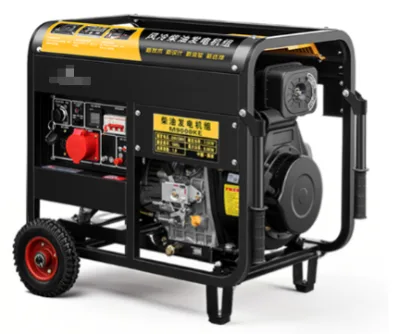


$28000.00 - $32000.00
Moq: 1

Comprehensive Sourcing Guide
Air Cooled Diesel Engine Generator Sourcing Guide
Buyers must first distinguish between portable and fixed installation requirements, as the observed product data explicitly lists both installation methods for air-cooled diesel units. The presence of "Portable" and "Fixed" installation types indicates that procurement strategies must align with the intended deployment environment, whether for temporary emergency crews or permanent land-use applications. Selecting the wrong mounting configuration can lead to significant logistical failures and safety hazards during operation.
Procurement teams should also verify the specific stroke and cooling architecture, as the listings confirm the availability of both two-stroke and four-stroke variants alongside air-cooled designs. This distinction is critical because two-stroke engines often differ in maintenance cycles and fuel efficiency compared to their four-stroke counterparts. Buyers must ensure the selected unit matches the operational duty cycle, particularly when choosing between common units and standby emergency power solutions.
Product Scope and Observed Listing Signals
The market data reveals a wide price spectrum ranging from 10 to 150,000 USD, suggesting that buyers will encounter both entry-level micro-generators and high-capacity industrial systems. This variance necessitates a clear definition of power requirements before engaging suppliers, as the observed models span from 2kW to 15kW and potentially higher. Understanding this range helps prevent budget overruns caused by over-specifying power needs or underestimating the cost of robust, automated systems.
Listing signals also indicate significant customization availability, with options for single-phase or three-phase output and various voltage ratings like 110V or 220V. Buyers should scrutinize the "Landuse Type" attributes, which include low-noise automation types and ordinary units, to ensure the noise profile and control features match the site constraints. The presence of specific model codes like AL-PT5 or AL-PT2V10 suggests that standardization is possible, but customization remains a viable path for unique operational demands.
Technical Specifications to Verify
Engine displacement and cylinder configuration are primary verification points, with observed data showing displacements between 150cc and 400cc and cylinder counts ranging from 1L to specific engine modes like 186f. Buyers must confirm that the engine mode aligns with the required torque and power output, especially for applications demanding high reliability in emergency crew scenarios. Mismatched engine specifications can result in premature failure or insufficient power delivery during peak load conditions.
Electrical output parameters require rigorous validation, specifically the rated current and frequency settings which appear as 9A, 35A, and 50/60Hz in the observed listings. The output type, whether AC single phase or three phase, dictates the compatibility with existing electrical infrastructure and load types. Procurement teams must ensure the rated power, such as the 10kW/12kVA or 2kW-15kW ranges, is sufficient for the intended load while accounting for startup surges and continuous duty cycles.
Compliance and Safety Documentation
Safety documentation must address the protection level and physical dimensions, as observed standards include IP23 ratings and specific footprint measurements like 720x475x530 mm. Buyers should verify that the enclosure meets the environmental requirements of the installation site, particularly regarding dust and water ingress for outdoor or industrial settings. The physical dimensions are equally critical for logistics planning, ensuring the unit fits within designated transport containers or facility spaces.
While background knowledge mentions ISO 8528 and CE, buyers must request explicit certification documents from the supplier rather than assuming compliance based on general market knowledge. The observed origin locations, including Fuzhou and Weifang, China, imply that international shipping and import regulations will apply. Procurement teams should ensure that all safety manuals and compliance certificates are provided in the target market language to facilitate local regulatory approval and safe operation.
Cost Drivers and Commercial Terms
Packaging methods significantly influence the final landed cost, with observed options including plywood cases, reinforced plastic film, and wooden crates. Buyers should evaluate the trade-off between packaging protection and shipping weight, as heavier wooden crates may increase freight costs but offer superior protection for long-distance transport. The choice of packaging can also impact the speed of unpacking and installation, which is a critical factor for emergency standby units.
Minimum Order Quantities (MOQ) and lead times are variable, with observed MOQs ranging from 1 to 50 units, allowing for both single-unit procurement and bulk industrial orders. Buyers must clarify whether the quoted price includes the startup mode, such as the 24V start-up system, or if these are separate line items. Understanding the total cost of ownership requires analyzing how customization, such as the "Yes" customized flag, affects the unit price and delivery schedule.
Supplier Qualification and Quality Control
Supplier qualification should focus on the consistency of product origins, as the data lists multiple Chinese manufacturing hubs including Fuzhou and Weifang. Buyers must verify that the specific factory producing the unit has a track record of maintaining the observed specifications, such as the air-cooled method and specific model numbers like AL-PT6. Consistency in manufacturing location often correlates with quality control stability and the ability to meet delivery schedules.
Quality control protocols must include verification of the startup mode and engine performance under load, as the listings specify 24V start-up and various engine modes. Buyers should request test reports or factory acceptance test data to confirm that the rated current and power output match the advertised specifications. Establishing a clear quality agreement that defines acceptable tolerances for dimensions and electrical output is essential for preventing disputes upon delivery.
Long-Term Procurement Checks
Sustainability and maintenance planning are vital for long-term success, particularly given the observed usage types which include common units, standby units, and emergency crew applications. Buyers should assess the availability of spare parts and the ease of maintenance for the specific engine mode, such as the 186f or four-stroke variants. A robust maintenance schedule ensures that the generator remains operational during critical power outages or extended land-use projects.
Future scalability should be considered when selecting models, as the observed range includes both micro-computer control automatic generators and simpler manual units. Buyers must evaluate whether the current procurement strategy allows for easy integration of additional units or upgrades to higher power capacities. Establishing a long-term relationship with a supplier who can support these future needs ensures continuity of power supply and reduces the risk of obsolescence.
FAQs
How do I choose between air cooled and water cooled diesel generator models?
Air cooled diesel generators suit portable, low-noise standby applications where maintenance should stay simple, while water cooled models handle longer continuous running with better thermal control. If your usage is common or standby duty with frequent relocation, air cooled units are practical. For fixed installation with heavier loads, water cooled three phase units are usually the better match.
What output types are available for these air cooled diesel generators?
The listed units include both AC single phase and AC three phase output types, with single phase models typically rated around 110V or 220V. Rated power spans from small 2kW portable units up to 10kW or 12kVA fixed models, and some listings cover 2kW to 15kW standby power ranges. Confirm the frequency and current rating, such as 9A or 35A, before ordering.
Which starting and control options do the diesel generator models offer?
Listings include self-starting diesel generators with 24V start-up and micro-computer control automatic diesel generator types. Self-starting units are convenient for standby and emergency crew usage because they engage without manual cranking. Automatic micro-computer control suits low-noise automation applications, so specify your preferred startup mode and control type when requesting quotations.
Can the generators be customized for my application?
Yes, customization is listed as available for these diesel generator products, and some models are explicitly marked as customized. You can typically request changes to output configuration, canopy or noise level, and installation method such as portable or fixed. Describe your use case, required rated power, and packing preference, such as plywood cases or reinforced plastic film, when requesting a customized offer.
How are the generators packed and where are they produced?
Packing options listed include plywood cases, reinforced plastic film supplied free of charge, and plastic film with wooden crates. Product origins shown include Fuzhou and Weifang, China. Plywood cases offer the strongest protection for sea freight, while plastic film packing reduces cost. Confirm the exact packing method for your chosen model before confirming the order.
What engine configurations are used in these generator models?
The listings reference engine models such as 186F, with both two stroke and four stroke configurations appearing across products. Cylinder setups include single cylinder units, and displacement ranges from about 150cc to 400cc. Four stroke engines are generally smoother and more fuel efficient for standby use, so verify the stroke type and engine model number for the specific capacity you need.
Which protection level and cooling details should I verify before purchase?
Check the protection level and cooling method listed for each model, since products show IP23 protection and both air cooled and water cooled variants. Air cooled units need adequate ventilation clearance around the generator, while water cooled units require coolant maintenance. For outdoor or dusty land use, confirm whether the stated IP23 level matches your installation environment and noise requirements.
What are the typical dimensions and installation methods for these units?
Listed dimensions include approximately 680 by 520 by 580mm, 720 by 475 by 530mm, 1000 by 600 by 740mm, and 1260 by 690 by 790mm depending on model capacity. Installation methods cover both portable and fixed setups. Smaller single cylinder models are portable for common unit usage, while larger three phase units are usually fixed installations for standby or emergency duty.